(This is a 2024 revision of the original article. The original can be found at the bottom of this page.)
The previous millennia witnessed outstanding technological advances that harnessed nature’s resources, advanced our understanding of the world, and improved the living conditions of humanity almost immeasurably, and it’s all thanks to our engineering innovation, progressive problem solving, and the endeavor of human imagination.
The 21st century appears to be on the precipice of a new dawn of advancement, with the evolution of knowledge and the next generation of world changing discoveries within reach, thanks to emerging technologies like AI, gene editing, and quantum computing.
However, none of that would be possible without the ingenuity, innovation and ideas that proceeded them, spanning the period from the Holy Roman Emperor Otto III to Otto from The Simpsons.
Given the breadth and scale of our progress during this period, and the subjective nature of the topic, it’s almost impossible to discern a definitive top 10. Plenty of worthy entries that have strong merit for inclusion have had to be omitted, like the introduction of paper money in China in 1024 or Bi Sheng creating the first moveable type printing system from ceramic there in 1040.
From 1000 to 2000 CE, our collective history spanned from Mayans and Aztecs to moon landings and the internet. Ghengis Khan ran riot establishing the Mongol empire, which seemingly set the tone for the later European colonizations that largely dictated the political and geographical landscape of the present day.
The age of empire only really ended when the sun finally set on the British Empire, but these endeavors, with all their violence and exploitation, did accelerate our progress as a species. They ultimately provided the funding for innovators and inventers to thrive and elevate their engineering prowess from their exposure to globally gathered new materials, ideas, and knowledge, which resulted in massive leaps in society, science, and technology.
The pace of change during these 1000 years has been remarkable, accelerated by what is arguably the defining era in our history of invention—The Industrial Revolution—which undoubtedly ushered in an age of rapid advancement, even if often at an environmental cost.
Throughout this period the world changed beyond recognition and in ways previously incomprehensible, so the inclusions on this Top 10 Greatest Innovations list are those groundbreaking discoveries and inventions that transformed the human condition and our experiences of life in previously unimaginable ways.
Top 10 Greatest Innovations
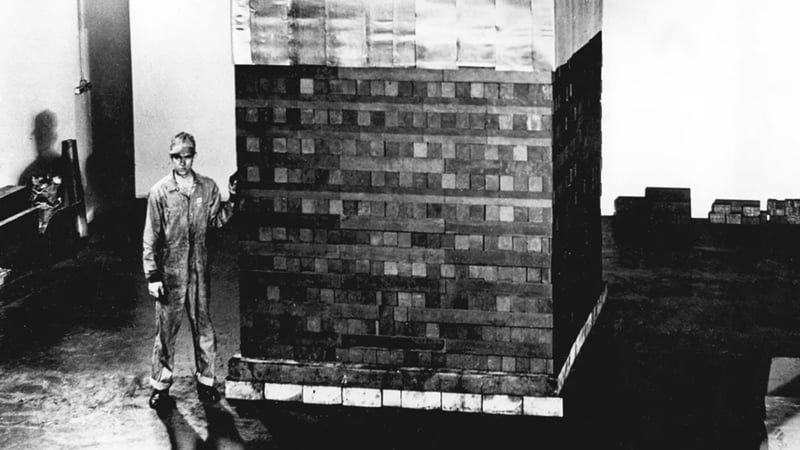
The Pile reactor
Enrico Fermi developed the first nuclear reactor and on December 2, 1942 created the world’s first controlled, nuclear chain reaction, with the results proving the potential of harnessing the immense power of radioactive materials that led to a host of different uses for them, primarily for military and energy purposes.
#9 Genetic Modification

Stanley Cohen (left) and Herbert Boyer pose during the Lemelson-MIT Prize ceremony, 1996
Biochemists Herbert Boyer and Stanley Cohen introduced this game changing healthcare technology to the world in 1972, when they successfully altered DNA. It’s arguable that genetic modification pre-dates this. Following the invention of #10 and increased interest in the effects of radioactive materials, Atomic Gardens were popular in the 1950s and we can thank the irradiated crop for the sweetcorn and ruby red grapefruits that we enjoy today.

Since their conception by Edward Jenner in 1796, they have formed an essential part of increasing the lifespan and health of humanity. They are estimated to save approximately 3 million lives a year and have allowed the eradication of smallpox, plus other previously deadly diseases will also be extinct in time thanks to this innovation.
#7 Harnessing Microwaves

From cooking to communication, GPS, and MRI, the modern world simply wouldn’t be possible without the discovery of microwaves and understanding how to utilize them. The volume of inventions that were, knowingly or unknowingly, reliant on microwaves makes it difficult to define an inventor or when discovered.
#6 Computers

Bill Gates in the early 1990s
Bill Gates and his Windows software opened up home computers to the world, as the usability of his software provided an intuitive interface that proved a catalyst for the adoption of PCs and the worlds digital transformation. When Charles Babbage debuted his “mechanical calculating machine” in 1833 (that he continued to refine until his death in 1871), it’s unlikely he realized how important his concept would become over the next 177 years. Interestingly, Babbage also invented the printer (that was likely more reliable than the average modern one!), as his “mechanical calculator” printed its answers on paper. Presumably because he hadn’t got round to inventing the monitor yet!
#5 Electricity

It was famously the catalyst in the film Back To The Future, but without it, we would be back to the dark ages, quite literally. From lighting to life support, this commodity is an essential requirement for the vast majority of modern human activity, including for utilizing previous innovations on this list.
Admittedly one could argue that given the concept of “electricity” was first documented in 600 BCE by Thales, that it doesn’t qualify for the timescale here. However, I would argue Stephen Gray discovering conductivity in 1729 or Ewald Georg von Kleist and Pieter van Musschenbroeks invention of the Leyden Jar that was able to store the energy in 1745 really mark the first tangible developments towards real world utilization. (No doubt some readers are wondering about Benjamin Franklin, but he effectively only proved that lightning was electrically charged.)
#4 Internal Combustion Engine

The First Internal Combustion Engine, 1807
This innovation was effectively created over a series of incremental improvements by many innovators following its first documented creation by François Isaac de Rivaz in 1807, which may have been based on the theoretical 1680 design of Christiaan Huygens. Since it was refined, most famously by Karl Benz, it has spawned many world changing developments like the the automobile, as well as innovations stemming from this initial concept, like the jet engine.
#3 Fractional Distillation Of Crude Oil

Whilst fractional distillation in various guises has likely been utilized throughout history, no implementation of this process compares with the impact of applying it to crude oil, as many of the inventions on this list would be infinitely harder to manufacture or impossible to operate without it. The fractional distillation of crude oil provides the raw materials that allow the modern world to function, as it literally fuels it, alongside providing the building blocks for a multitude of products, including plastics, solvents, and lubricants. Generally, its thought that this innovation originated in the 1820s, however there is evidence that the first “modern” refinery was established in Baku, Azerbaijan around 1000 CE, although obviously unsophisticated compared with those that emerged many centuries later.

This monumental shift in medicine was arguably only discovered because Dr. Alexander Fleming decided to go on holiday in 1928. Upon his return he noticed that the mold on his petri dish appeared to prevent bacteria growth; this mold was effectively what we now call penicillin. It enabled previously serious or fatal conditions to be easily treated and is credited with saving over 200 million lives since its discovery, as well as contributing to almost doubling human life expectancy.
#1 The Printing Press

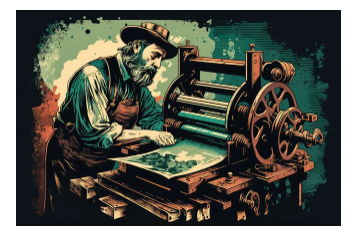
Invented by Johannes Gutenberg in 1450, the printing press enabled the mass production of books and instigated a new age of enlightenment, as the ability to reproduce knowledge whilst reducing the cost of producing text, provided the basis for substantial improvements in education and literacy rates. Without it, many of the other innovations on this list would have never existed, as those inventors probably wouldn’t have been able to access the knowledge that enabled them to devise their concepts and develop their ideas, thus it takes top place on the list.
(Author Lee Radford is a guest contributor and writes a Substack blog. His biography is available on LinkedIn.)
The following original version of this article was written in 2000 by Larry Gormley.
During the technology-feeding frenzy of the late 1990s, many experts declared the Internet one of the most important inventions since the Industrial Revolution. However, after the happenings of the past few years that perspective has changed. While the Internet and the World Wide Web have certainly impacted the lives of many millions of people it is certainly not the greatest invention of the past millennium, it might not even make the top ten.
As Robert J. Gordon writes, "Internet surfing may be fun, but it represents a far smaller increment in the standard of living than what was achieved by the extension of the day into night achieved by electric light. The revolution in factory efficiency achieved by the electric motor, the flexibility and freedom achieved by the automobile, the saving of time and shrinking of the globe achieved by the airplane, the new materials achieved by the chemical industry, the first sense of live two-way communication achieved by the telephone, the arrival of live news and entertainment into the family parlor achieved by radio and then television, and the enormous improvements in life expectancy, health, and comfort achieved by urban sanitation and indoor plumbing."