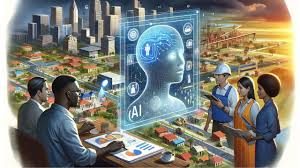
The Great Divergence: Navigating AI’s Impact on the Developing World
Artificial intelligence (AI) is often hailed as a "great equalizer," but for the developing world, the reality in 2026 is more complex. While AI could add up to 1.2% to annual GDP growth in emerging economies, it also threatens to widen the gap between the Global North and South. Current data shows a widening "AI gap," with usage rates at 27.5% in the Global North compared to 15.4% in the South.
The Promise: Precision and Productivity
For nations with limited resources, AI offers high-impact "small AI" solutions—lightweight models that solve local problems without requiring massive data centers.
- Agriculture: In Vietnam, digital tools provide 39 million farmers with real-time data for crop traceability.
- Financial Inclusion: Mongolia’s AI-driven credit scoring has unlocked over $70 million in micro-loans for 4,000 businesses.
- Public Health: Flood-forecasting systems in northeast India have doubled prediction accuracy, saving lives through earlier warnings.
The Peril: Job Displacement and Resource Extraction
The primary risk for developing nations is the erosion of their traditional competitive edge: low-cost labor.
- Service Exports: Industries like IT services in India and call centers in the Philippines face existential threats as AI reduces the labor intensity of these tasks.
- The "Predator" Model: Research using Lotka-Volterra equations (predator-prey dynamics) suggests that when AI growth outpaces human skill adaptation, it acts as a predator to jobs, leading to rapid economic inequality.
- Material Toll: The hardware for global AI depends on raw minerals often extracted from unstable, low-income states, creating a new form of "digital extractivism".
The Foundations for Success (The "Four Cs")
To transition from AI consumers to creators, the World Bank and UNCTAD emphasize strengthening four pillars:
- Connectivity: Improving digital and energy infrastructure, as 2.2 billion people remain offline in 2025.
- Compute: Developing sovereign AI supercomputing and local data centers to ensure "AI sovereignty".
- Context: Creating high-quality local datasets to prevent algorithmic bias and ensure AI understands local languages and cultures.
- Competency: Investing in literacy. Initiatives like training one million South Africans in AI by 2026 are crucial for workforce survival.
The 2026 Outlook
We are witnessing a shift toward "Responsible AI" traction. Forums like the Nairobi AI Forum 2026 are now focusing on "green sovereign AI" and cross-border partnerships to ensure Africa and other regions are co-creators of the digital era, rather than just observers.